
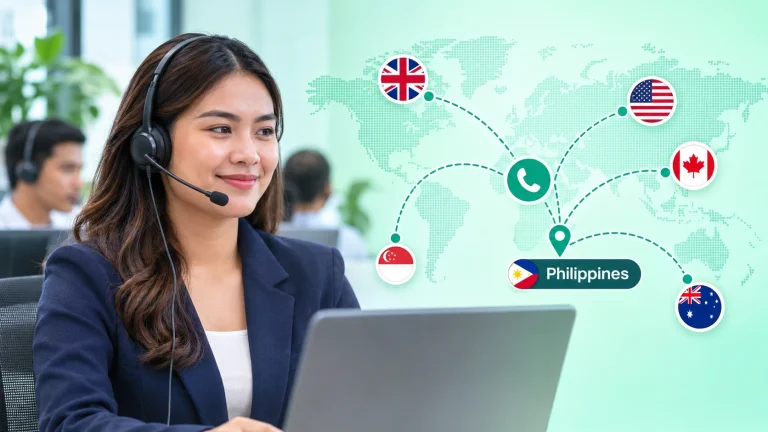
Yes, a call centre operating in the Philippines can place calls to overseas destinations using an internet-based business phone system. If the business also wants recipients to see a local number from the country being called, it may be able to use a legitimate virtual phone number assigned for that market. International calling and displaying a destination-country caller ID are related, but they are not the same thing.
How Does International Calling from the Philippines Work?
Traditional international calling uses a telecommunications provider to connect a call from one country to another. Cloud phone systems use Voice over Internet Protocol (VoIP) to carry voice calls over an internet connection and route them through connected telephony networks. This allows agents based in the Philippines to communicate with overseas contacts without each agent needing a separate traditional international phone line.
A business can use a cloud phone platform to call people in other countries. Agents simply sign in, choose a contact and make the call. The platform connects the call through its network. Call availability, quality, supported countries and rates depend on the provider and the destination country.
Can Agents Show an International Local Caller ID?
In some markets, yes. A business may obtain a legitimate virtual phone number for the country it wants to reach and configure that number as its outbound caller ID, where the provider and local rules permit it. For example, a Philippine BPO serving customers in the United Kingdom may ask its provider about an eligible UK virtual phone number. Agents can then make calls from the Philippines while presenting the authorised UK phone number to recipients.
A local caller ID can make the origin of a business call clearer to recipients, but it does not guarantee that a person will answer. Number availability, registration requirements, caller ID presentation and permitted use vary by country and carrier. Businesses should confirm these details before launching a campaign.
International Calling vs. International Caller ID
International calling describes where the call is going. International caller ID describes the phone number displayed to the person receiving the call. A Philippine agent can call an overseas phone number while presenting an approved business phone number, but the caller ID must be assigned to or authorised for that business. It should never be falsified or manipulated to impersonate another person or organisation.
What Should a Philippine Call Centre Look for in a Phone System?
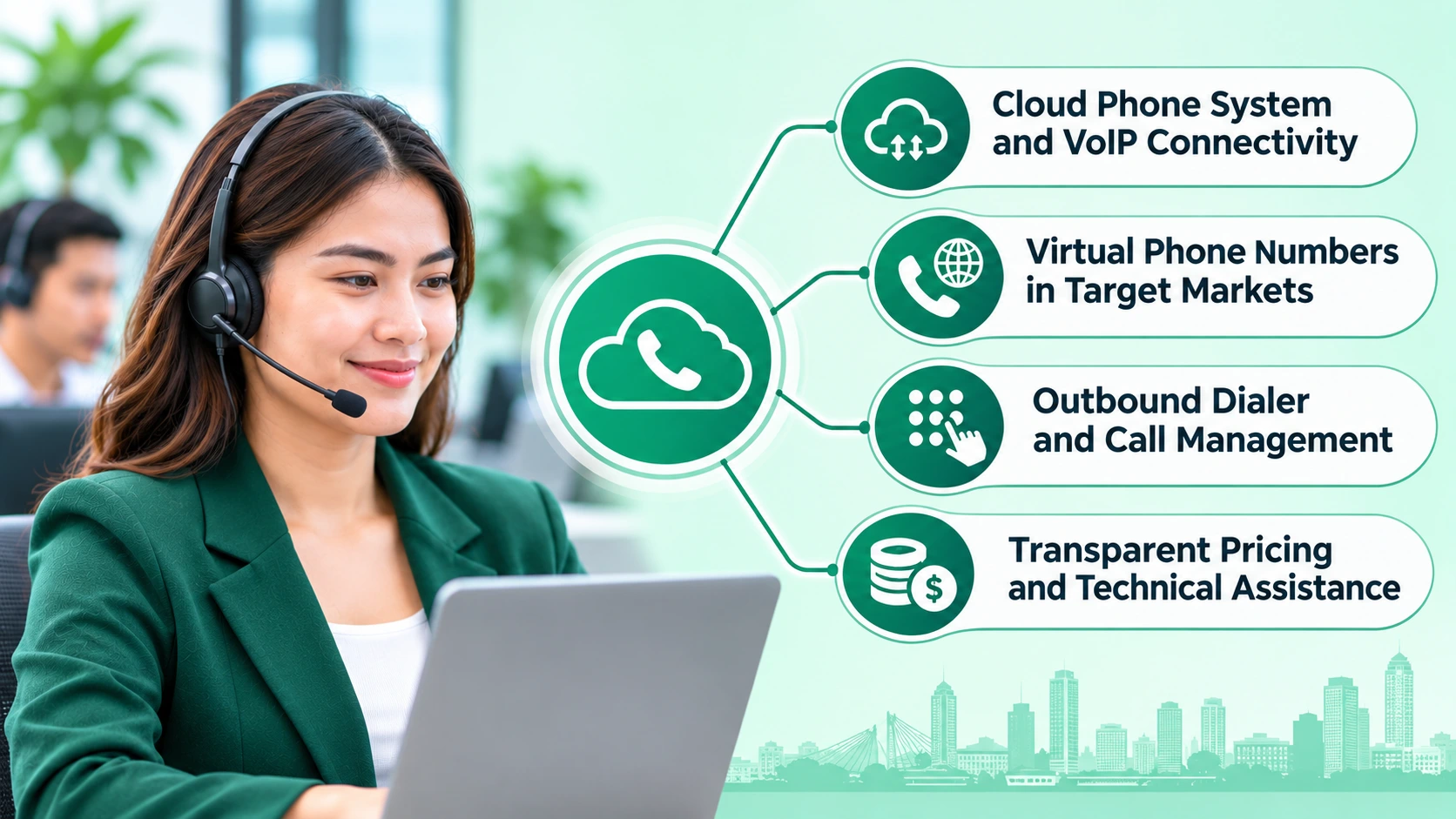
Cloud Phone System and VoIP Connectivity
A cloud phone system lets agents make and receive business calls through an internet connection. Check supported countries, network requirements, voice quality, failover options and whether the provider can route calls to your target destinations.
Virtual Phone Numbers in Target Markets
Ask whether the provider can supply the specific local or international number type required in each country. Confirm eligibility, business documents, address or identity requirements, number activation, inbound capability, outbound caller ID use and recurring charges. Do not assume every number type supports every function.
Outbound Dialer and Call Management
For teams handling many leads, an outbound dialer can organise calling lists and reduce manual number entry. Predictive, Power and Preview Dialers serve different workflows. Call recording, reporting, dispositions and CRM integration can also help teams review activity and maintain contact records, depending on the platform configuration.
Transparent Pricing and Technical Assistance
Compare international call rates, number rental fees, setup charges, minimum commitments and any additional costs. Ask for a demonstration using the countries your team actually calls. Test calls to relevant mobile and landline networks before moving a full campaign.
Can Klozer Support International Calling for Philippine Teams?
Klozer offers a cloud-based phone system that allows businesses to make and receive calls over the internet. Businesses can also get virtual phone numbers to connect with people in other countries and make international calls.
Klozer assigns these phone numbers to the business and does not allow number spoofing. The platform also includes features such as call routing, IVR, call analytics and predictive dialing.
Before choosing Klozer, a call centre in the Philippines should confirm whether its required country and phone number are available. It should also check the caller ID options, required documents, calling rates and available features with the Klozer team. These details may vary depending on the country.
Compliance and Responsible International Calling
A business should use only numbers assigned to it or numbers it is authorised to present. Caller ID manipulation intended to mislead recipients can create legal and carrier risks. In the Philippines, the SIM Registration Act (Republic Act No. 11934) includes provisions addressing spoofing of a registered SIM when done with intent to defraud, cause harm or wrongfully obtain value. The exact legal position depends on the facts and applicable rules.
Call centres must also consider privacy and direct-marketing requirements in the Philippines and in every destination market they contact. The Philippine Data Privacy Act and its implementing rules set principles for lawful processing, transparency, legitimate purpose, proportionality and data security. A calling platform does not automatically make a campaign compliant.
Conclusion
A call centre in the Philippines can call customers and prospects overseas using an international calling service or cloud phone system. Where supported, it may also present an authorised virtual phone number from the destination country as its caller ID. The key is to distinguish call routing from caller ID, verify number eligibility and costs, and use only legitimate numbers. With the right configuration, Philippine BPOs can manage international communication without setting up a traditional phone line for every agent.
