
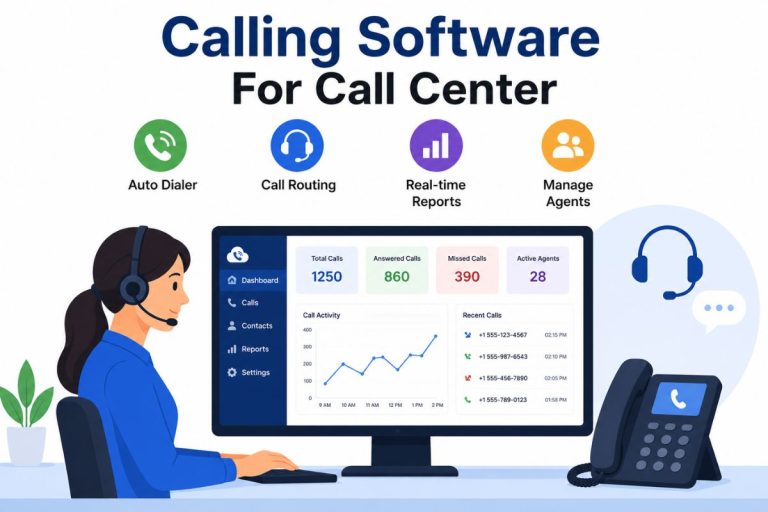
Choosing the right Calling Software For Call Center operations is an important decision in 2026. The software affects call quality, agent performance, customer service, and business costs. A modern Call Center Phone System in Australia should help agents answer calls quickly and manage customer conversations from one place. It should also support remote teams, provide useful reports, and protect customer information. Klozer should compare different systems carefully instead of selecting the cheapest option. The right platform should match the size of the team, the number of daily calls, and the long-term goals of the business.
1. Understand Your Call Center Needs
Before comparing tools, businesses should clearly understand why they need Calling Software For Call Center teams. Some call centers mainly receive customer support calls, while others focus on sales and outbound campaigns. A Customer Support Calling Platform in Australia may need call queues, ticket integration, recordings, and fast call transfers. A sales team may need automatic dialling, lead management, and callback reminders. Businesses should also estimate the number of agents, expected call volume, working hours, and future growth. Clear requirements make it easier to remove unsuitable options and focus on platforms that can support daily operations without unnecessary features.
2. Choose Between Cloud-Based and On-Site Software
Businesses should decide whether they need cloud-based or on-site Calling Software For Call Center operations. A cloud solution runs through the internet and usually requires less equipment. It can be a good choice for remote teams and growing companies. An on-site Business Call Operations Platform in Australia is installed on company equipment and may offer more direct control, but it often costs more to maintain. Cloud platforms are usually easier to update and expand. However, they depend on a stable internet connection. Businesses should compare setup costs, maintenance needs, security controls, and technical support before selecting either option.
3. Check Inbound and Outbound Calling Features
The right Calling Software For Call Center teams should support the type of calls the business manages every day. Reliable Inbound And Outbound Call Software in Australia should allow agents to receive customer calls and contact new or existing prospects. Important inbound features include call queues, routing, hold messages, voicemail, and call transfers. Useful outbound features include preview dialling, power dialling, scheduled callbacks, and contact list management. A combined platform can reduce the need for several separate tools. It also gives managers a clearer view of customer support and sales activity through one organised system.
4. Look for Intelligent Call Routing
Call routing helps customers reach the right person without waiting too long. Good Calling Software For Call Center teams should send calls based on department, agent skill, customer language, location, or availability. Automated Call Handling Software in Australia can use menu options and customer details to direct each caller. For example, a billing question can go directly to the accounts team, while a technical issue can reach a trained support agent. Smart routing reduces unnecessary transfers and improves the customer experience. It also balances the workload between agents, which can prevent some employees from receiving too many calls.
5. Review the Agent Dashboard
Agents need a simple screen that helps them complete tasks quickly. The best Calling Software For Call Center work should provide a clean and easy dashboard. A Call Center Agent Dashboard in Australia may show the customer’s name, phone number, previous conversations, call status, notes, and next action. Agents should be able to answer, hold, transfer, and end calls without moving between several pages. A confusing dashboard can slow down calls and increase mistakes. Businesses should ask agents to test the platform before buying it. Their feedback can show whether the system is practical for real daily work.
6. Make Sure CRM Integration Is Available
A customer relationship management system stores valuable sales and support information. Modern Calling Software For Call Center teams should connect with the CRM already used by the business. An integrated Contact Center Communication Tool in Australia can automatically display customer details when a call begins. It can also save call duration, notes, outcomes, and follow-up tasks after the conversation. This reduces manual data entry and helps agents understand the customer’s history. Strong CRM integration also allows sales and support teams to share information. Businesses should check whether the dialer supports direct integration or requires extra third-party software.
7. Compare Automation Features
Automation can save time and allow agents to focus on customers. Effective Calling Software For Call Center operations should handle simple and repeated tasks automatically. Automated Call Handling Software in Australia can manage call distribution, callback scheduling, voicemail, contact updates, and basic customer requests. Some platforms can also send confirmation messages after a call or create a follow-up task for an agent. However, businesses should not automate every part of customer service. Customers still need access to a real person when their issue is complex. The best system should create a useful balance between fast automation and personal support.
8. Examine Call Recording and Quality Monitoring
Call recording is useful for training, quality control, and dispute management. Secure Calling Software For Call Center teams should allow approved users to record, store, search, and review conversations. An Agent Call Management System in Australia may also include live call listening, whisper coaching, and call joining. Live listening allows a manager to hear the conversation. Whisper coaching lets the manager guide the agent without the customer hearing. Call joining allows a supervisor to enter the call when help is needed. Businesses must follow Australian privacy and consent rules when recording or reviewing customer conversations.
9. Study Reports and Performance Analytics
Reports help managers understand whether the call center is meeting its goals. The right Calling Software For Call Center operations should provide simple reports with useful information. A Business Call Operations Platform in Australia may show call volume, missed calls, waiting time, average handling time, first-call resolution, agent availability, and customer satisfaction. Managers should be able to filter reports by date, department, campaign, or individual agent. These details can reveal delays and training needs. Reports should be easy to read and export. Complicated data is not helpful when managers cannot understand or use it.
10. Check Security and Australian Compliance
Customer information must be protected at every stage. Reliable Calling Software For Call Center teams should include secure logins, data encryption, user permissions, backups, and activity records. A trusted Contact Center Communication Tool in Australia should clearly explain where business data is stored and who can access it. Companies must also consider privacy, recording consent, telemarketing, and do-not-call requirements. The software provider should offer suitable security and compliance tools, but the business is still responsible for correct use. Managers should create clear internal policies and train every agent before allowing them to handle private customer information.
11. Test Call Quality and Reliability
Even advanced Calling Software For Call Center operations will fail if calls are unclear or frequently disconnected. A dependable Call Center Phone System in Australia should provide clear sound, low delay, and stable connections. Businesses should test the system on their normal internet network, computers, and headsets. They should also check how the platform performs during busy calling periods. Ask the provider about service uptime, backup systems, and technical support. A free trial can help teams identify sound problems before signing a contract. Clear calls help agents sound professional and make it easier for customers to explain their needs.
12. Compare Pricing and Future Growth
Price is important, but the cheapest Calling Software For Call Center option may not provide the best value. Businesses should review setup fees, monthly plans, call charges, storage limits, support costs, and extra feature fees. A flexible Inbound And Outbound Call Software in Australia should allow companies to add or remove users as their team changes. It should also support more calls, departments, and locations without requiring a complete system change. Businesses should calculate the total cost for at least one year. A scalable platform may cost slightly more at first but can prevent expensive replacement work later.
Conclusion
The right Calling Software For Call Center teams can improve customer service, agent productivity, and business control. Klozer should choose a platform that supports clear calls, smart routing, CRM integration, automation, reports, security, and future growth. A useful Customer Support Calling Platform in Australia should also be easy for agents and managers to use. Businesses should create a feature list, compare several providers, and test the leading options with a real campaign. The final decision should not depend on price alone. A dependable calling system should solve current problems while remaining flexible enough to support future business needs.
Frequently Asked Questions
What Is the Most Important Feature in Call Center Software?
The most important feature depends on the business, but reliability should always come first. Calling Software For Call Center teams must provide clear calls and stable service before any advanced feature becomes useful. A dependable Call Center Agent Dashboard in Australia should also make it easy for agents to view customer details, manage calls, and add notes. Other important features include routing, CRM integration, reporting, recording, and security. Businesses should choose features based on their main goal. A customer service center may value fast routing, while a sales team may need stronger outbound dialling tools.
Is Cloud Calling Software Suitable for Remote Agents?
Yes, cloud-based Calling Software For Call Center teams is often suitable for remote and hybrid work. Agents can usually log in from approved computers and manage calls through an internet connection. A cloud Agent Call Management System in Australia can give managers access to live activity, call recordings, reports, and agent status from different locations. However, remote agents need stable internet, good headsets, secure devices, and a quiet working space. Businesses should also use strong passwords and access controls. The system should be tested at each remote location before agents begin handling customer calls.
How Can a Business Test Call Center Software?
A business should test Calling Software For Call Center operations through a free trial or short pilot campaign. The team should check call quality, routing, dashboard controls, CRM integration, reports, recordings, and customer support. A practical Business Call Operations Platform in Australia should work smoothly with the company’s existing internet, devices, and software. Both agents and managers should share feedback after the test. Businesses should also check pricing, contract terms, security, and future user limits. A real test provides more useful information than a product demonstration because it shows how the platform performs during normal daily work.